Showing posts with label Reading. Show all posts
Showing posts with label Reading. Show all posts
Wednesday, 22 August 2018

Wednesday, 1 August 2018
Wednesday, 6 June 2018
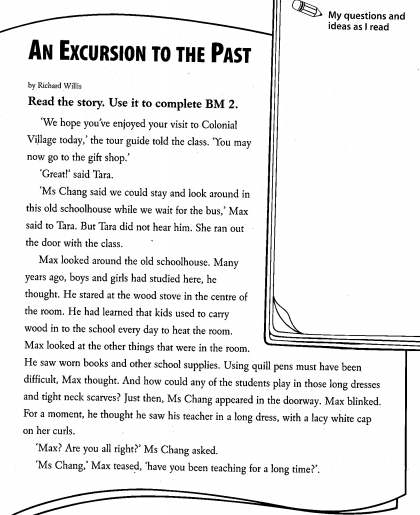
An Excursion to the Past!
An Excursion to the Past:
Question
|
Answer
|
1. What Artefacts did Max see in the schoolhouse?
|
Wood ovens, quills and worn out books were the artefacts that were seen in the schoolhouse.
|
2. How did the artefacts in the exhibit bring the past to life for Max?
|
It brought the past to life because he thought about how life would've been with all the different artefacts and how children struggled with bringing wood daily to school for fire.
|
3. If you were to illustrate this story, what illustrations would you include to bring the past to life for the reader?
|
This illustration is my interpretation of what a class would look like brought back to life.
How is your classroom different from a classroom that the classroom your grandmother might have gone to?
- My grandmother's classroom didn't have devices or chromebooks as we have today in many schools. They also probably used chalkboards instead of whiteboards which is very common to see in schools today.
A person from the past just walked into your classroom. What would they know about your school by just looking around?
- A person from the past would notice our tables are coloured and made of polished metal. They would see that we have chromebooks and there is a whiteboard instead of a chalkboard on the wall, however these whiteboards are now not only for writing but they are used interactively by teachers who cast different online sites and work to the whiteboard. From analysing these different aspects they would definitely know that they are not in the past anymore.
Monday, 28 August 2017
The Greenhouse Effect!
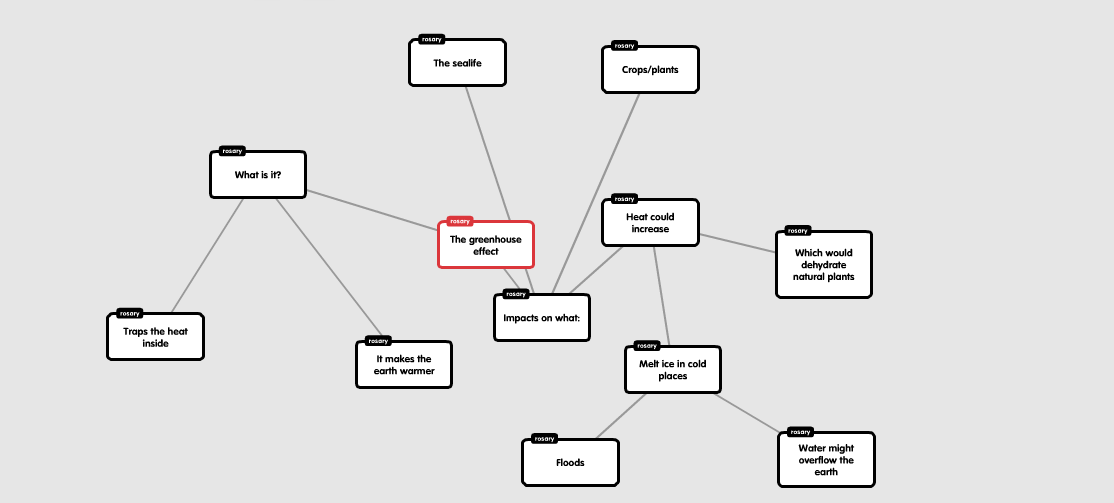 The Greenhouse effect occurs when heat is trapped into the earth in which it causes an increase in warmth. The greenhouse effect negatively impacts on a lot people, places and the environment.
This impacts on the melting of icebergs and blocks in cold areas such as Antarctica. It causes water to enlarge or increase in size. Seeing that, in the future there could be a possibility that the water might overflow onto islands that are surrounded by water such as Fiji, Samoa and Tonga because the islands are very small and basically enclosed by ocean water. They could either be overflowed by water or even sink into the ocean.
Secondly, the greenhouse effect from the sun can be too hot and end up heating up or dehydrating the land. This could dehydrate plants, trees, crops and many more natural substances in this world. This could lead to lack of food, plants and an increase of heat degree.
The Greenhouse effect is very dangerous and could affect a lot of things in this world especially in the near future.
WALHT: to use the structures and features of an explanation.
Tuesday, 15 August 2017
Tuesday, 13 June 2017
Trapped in the snow!
Walht: use critical thinking skills to: identify, analyse and evaluate articles and stories that involve ‘Facing Challenges’
After reading this story, I have created the following P.M.I. graphic organiser where I have identified key ideas through analysing and evaluating the text in relation to
- Facing Challenges
Synopsis:
- A family went on a tramping trip at a snowy and very cold winter reserve. They lived in a lodge for a while and stayed there. They had quite the adventure, with frozen toilets, barely any food and freezing cold areas. Although it was still a great way to spend time as a family.
Positive
|
Minus
|
Interesting
|
Challenges help build up knowledge the next time they face the same challenge. It would help people be more wise about the challenge.
|
It can be very dangerous especially because it was very cold.
|
What I found interesting was that they had the perseverance and courage to manage and survive through the snow.
|
Some involve: facing a fear or overcoming something you're afraid of e.g heights, cold, etc.
|
Allergies could be caused on the family especially based on the area they were at.
|
They managed to ration their food and went through the week and survived even though they had very little food to eat.
|
They can make you feel Stronger and confident.
|
Phobias and (fears). This can cause injuries.
|
They didn't seem to have any phobias or fears of where they were.
|
In outdoor situations people also can learn how to survive in the wild especially because it was cold.
|
Pneumonia and hyperthermia -too cold. This can cause very serious problems and even cause death in some cases.
|
They found something to enjoy in their free time such as playing cards and a game of Who am I? which I found quite interesting seeing as they had no access to electricity or devices.
|
Tuesday, 11 April 2017
Water Worries!
Who causes the water pollution and how does it connect with the water we drink?
When people pollute at water sites especially where the water supply is being held such as the Waitakere ranges and more.
What I found out:
- Along Tamaki, a charity decided to clean up all the rubbish around the area.
- They picked up about 25 cubic metres of rubbish that was hidden under mangroves.
- One of the people who were picking up said that he couldn't believe how much rubbish was hiding under everything.
- Other people's comments explained how unpleasant and sickening the smell and the sight was disgusting.
Sunday, 11 December 2016
A colon is used to introduce a group of items!
Learning Intention: We are learning to develop our understanding of punctuation marks.
Success Criteria: I know I can do this when I explain that parentheses are used to enclose information like an example.
Friday, 2 December 2016
The cause of a person's itchy arm is the mosquito bite!
Learning Intention: We are learning to make connections with the text that we read.
Success Criteria: I know I can do this when I explain that the words used to show cause and effect are, because, if, when, so and then.
Wednesday, 30 November 2016
The text tells me that it is very cold in Antarctica!
Learning Intention: We are learning to make connections with the text that we read.
Success Criteria: I know I can do this when I explain that making inferences helps us to understand more about the text.
Friday, 11 November 2016
Questioning helps us to understand about the text that we read!
Learning Intention: We are learning to make connections with the text that we read.
Success Criteria: I know I can do this when I explain that questioning helps us to understand more about the text.
Sunday, 30 October 2016
Yay, Rosie tamed Ginger!
Learning Intention: We are learning to understand the text that we read.
Success Criteria: I know I can do this when I write a summary about the story: Ginger the stray kitten.
Sunday, 16 October 2016
Hmm, I wonder why the five girls left their siblings at home?
Learning Intention: We are learning to make connections with the text and develop our critical thinking skills.
Success Criteria: I know I can do this when I use the ideas from the story How Sonny Bear went to a picnic to write five critical thinking questions about it.
Tuesday, 6 September 2016
Oh no! Someone drank Goldilocks' maple!
Learning Intention: We are learning to make connections with the text and develop our critical thinking skills.
Success Criteria: I know I can do this when I use the ideas from the story Maple sugar for Sonny bear to write five critical thinking questions.
Sunday, 4 September 2016
'Occasionally' is an example of a modal adverb!
Learning Intention: We are learning to develop understanding the English grammar.
Success Criteria: I know I can do this when I explain that modal adverbs are words like, impossibly, positively and scarcely.
Tuesday, 30 August 2016
Poor Baby Bear, the salt must've tickled his throat!
Learning Intention: We are learning to make connections with the text that we read.
Success Criteria: I know I can do this when I use the ideas from the text to create critical thinking questions about the story 'When mother bear made pickles'.
Sunday, 28 August 2016
Break a leg!
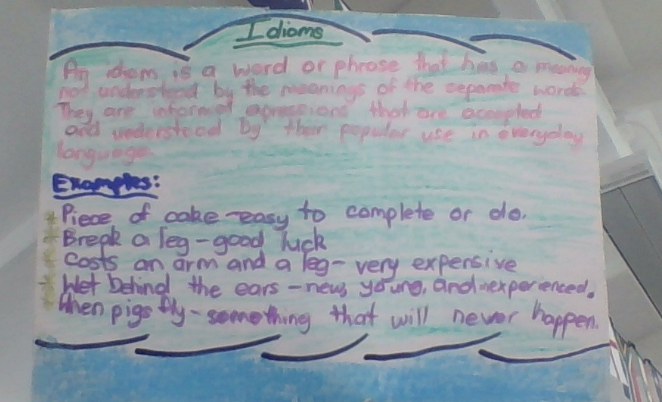
Learning Intention: We are learning to develop our understanding of the English grammar.
Success Criteria: I know I can do this when I explain that an idiom is a simple figure of speech that is understood by their popular use in everyday language.
Saturday, 27 August 2016
Do you know what your five senses are?

Learning Intention: We are learning to develop our understanding of the English grammar.
Success Criteria: I know I can do this when I explain that sensing verb are verbs that are related to the five senses.
Wednesday, 24 August 2016
Do you know the differences between factual adjectives and adjectives?
Learning Intention: We are learning to develop our understanding of the English grammar.
Success Criteria: I know I can do this when I explain that a relative pronoun give factual information about something or someone.
Friday, 19 August 2016
The word 'passenger' is an adjective that is used to classify someone!
Classifying adjectives are adjectives that are used to classify. They tell us 'what type'. Classifying adjectives place people and things into classes and groups. They are non- gradable. In this sentence, the classifying adjective, "passenger", describes the type of train. This is a sentence with a classified adjective in it: We boarded the passenger train.
More examples are:
Our family has Irish stew every Friday.
|
Do you live in the northern hemisphere?
|
I can play a musical instrument
|
I have a white mouse.
|
We watched the royal wedding.
|
Sara selected the female kitten at the pet store.
|
Jack took a brown waffle from the breakfast shop.
|
On Saturdays we go to a french buffet.
|
In the sentence, 'I saw a brown dog', 'brown' is the classified adjective because it is describing what the colour of the dog.
Learning Intention: We are learning to understand the English grammar.
Success Criteria: I know I can do this when I explain that an adjective used to classify tells us what type something is.
Subscribe to:
Posts (Atom)